Why Keep a Tulsi Plant with an Idol?
In Indian homes, spirituality is not limited to temples or prayer rooms; it naturally flows into everyday life. One of the most timeless and meaningful expressions of this belief is the practice of keeping a Tulsi plant alongside a deity idol.
Table of Contents
Why keep a Tulsi Plant with an Idol?
This sacred combination is not merely a ritual passed down through generations; it is a thoughtful practice rooted in scriptural wisdom, Vastu Shastra, and personal spiritual experience. The Tulsi plant symbolizes living devotion and purity, while the idol represents divine consciousness and guidance. Together, they create a complete spiritual ecosystem where nature and divinity coexist in harmony. This pairing transforms an ordinary courtyard, balcony, or corner of a home into a space of calm, protection, and positive energy.
Whether in a traditional courtyard or a modern apartment, keeping a Tulsi plant with an idol serves as a daily reminder of faith, discipline, and balance. It invites clarity into the mind, stability into the home, and devotion into everyday routines, making spirituality a lived experience rather than an occasional act.
Why the Tulsi Plant Is Spiritually Significant

Tulsi (Holy Basil) is honored as Maa Tulsi or Vrinda Devi, representing divine devotion and purity. Scriptures state that Tulsi is extremely dear to Lord Vishnu, and no worship of Vishnu or Krishna is considered complete without her presence. Beyond religious significance, Tulsi is associated with positive energy, air purification, and mental calmness.
Its presence is believed to ward off negativity, promote clarity of thought, and create a sattvic (pure) atmosphere in the home. When an idol is placed near Tulsi, the energy becomes complete, as the living essence of nature supports the still presence of the divine.
The Sacred Story of Tulsi: From Devotion to Divinity
The story of Tulsi is not just a myth; it serves as a spiritual teaching about devotion, sacrifice, dharma, and divine grace. This is why Tulsi is not regarded as an ordinary plant in Indian homes. She is worshipped as Maa Tulsi or Vrinda Devi, embodying purity and unwavering faith.
Tulsi as Vrinda Devi — The Devoted Queen
Long ago, there lived a righteous and devoted woman named Vrinda. She was married to the powerful Asura king, Jalandhar. Although Jalandhar was fierce and ambitious, his strength derived not just from his arrogance but also from Vrinda’s unwavering purity, loyalty, and spiritual discipline.

Vrinda was so pure in her devotion that as long as she remained faithful, no weapon could defeat her husband. Her spiritual power acted as an invisible shield, making Jalandhar unstoppable—even against the gods. This represents a deep truth in Sanatana Dharma: true spiritual power often lies not in weapons, but in goodness and devotion.
The Divine Test of Dharma
As Jalandhar’s tyranny increased, the balance of the universe was disturbed. The gods were unable to defeat him due to Vrinda’s protective power. To restore cosmic order, Lord Vishnu intervened—not to punish Vrinda, but to test the limits of dharma. Vishnu took on the form of Jalandhar and approached Vrinda. Mistaking him for her husband, she momentarily broke her vow of exclusive devotion. At that instant, Jalandhar’s divine protection vanished, leading to his defeat in battle. When Vrinda realized what had happened, she was heartbroken—not out of anger, but from a deep sense of betrayal mixed with unbearable sorrow. Her grief was so intense that she renounced her physical form.
The Birth of Tulsi
From Vrinda’s sacrifice and broken heart, the Tulsi plant was born. Instead of allowing her devotion to end in sadness, Vishnu transformed her into a form that would be worshipped forever, found in every home and close to every devotee. He blessed her by saying:
- She would be more beloved to him than all flowers and ornaments.
- No worship of Vishnu or Krishna would be complete without her leaves.
- Her presence would purify homes, hearts, and minds.
Thus, Vrinda became Tulsi—no longer in suffering, but elevated into living divinity. This is why Tulsi is called Vishnupriya—the beloved of Vishnu.
Tulsi Vivah
To honor this divine bond, Hindu tradition observes Tulsi Vivah, a ceremonial marriage of the Tulsi plant with Vishnu (often represented as Shaligram or Krishna).

This ritual symbolizes:
Blessings for marriage, fertility, and prosperity
The union of devotion (Tulsi) with consciousness (Vishnu)
Renewal of dharma and harmony in the household
Tulsi Vivah is usually performed in the month of Kartik, marking the end of the monsoon and the beginning of the auspicious wedding season.
Head over to The Stone Studio to explore our stunning range of Tulsi planter statues and other Godly Figures, expertly crafted to enhance the beauty of your home and garden!
www.thestonestudio.in
Download Our Free Brochure Here!
The Power of Combining Tulsi Plant with an Idol
The Tulsi plant is known for its significant spiritual and health benefits. When paired with an idol, it fosters a harmonious spiritual environment. The Tulsi plant symbolizes life, growth, and devotion, while the idol represents divine consciousness and guidance.
This combination promotes several key aspects of spiritual practice, including:
Daily mindfulness and prayer: Encourages individuals to engage in regular spiritual reflection.
A disciplined spiritual routine: Helps establish consistency in spiritual activities. Positive energy flow throughout the home: Enhances the overall atmosphere and vibrational quality of living spaces.

Emotional grounding and inner peace: Supports mental clarity and tranquility.
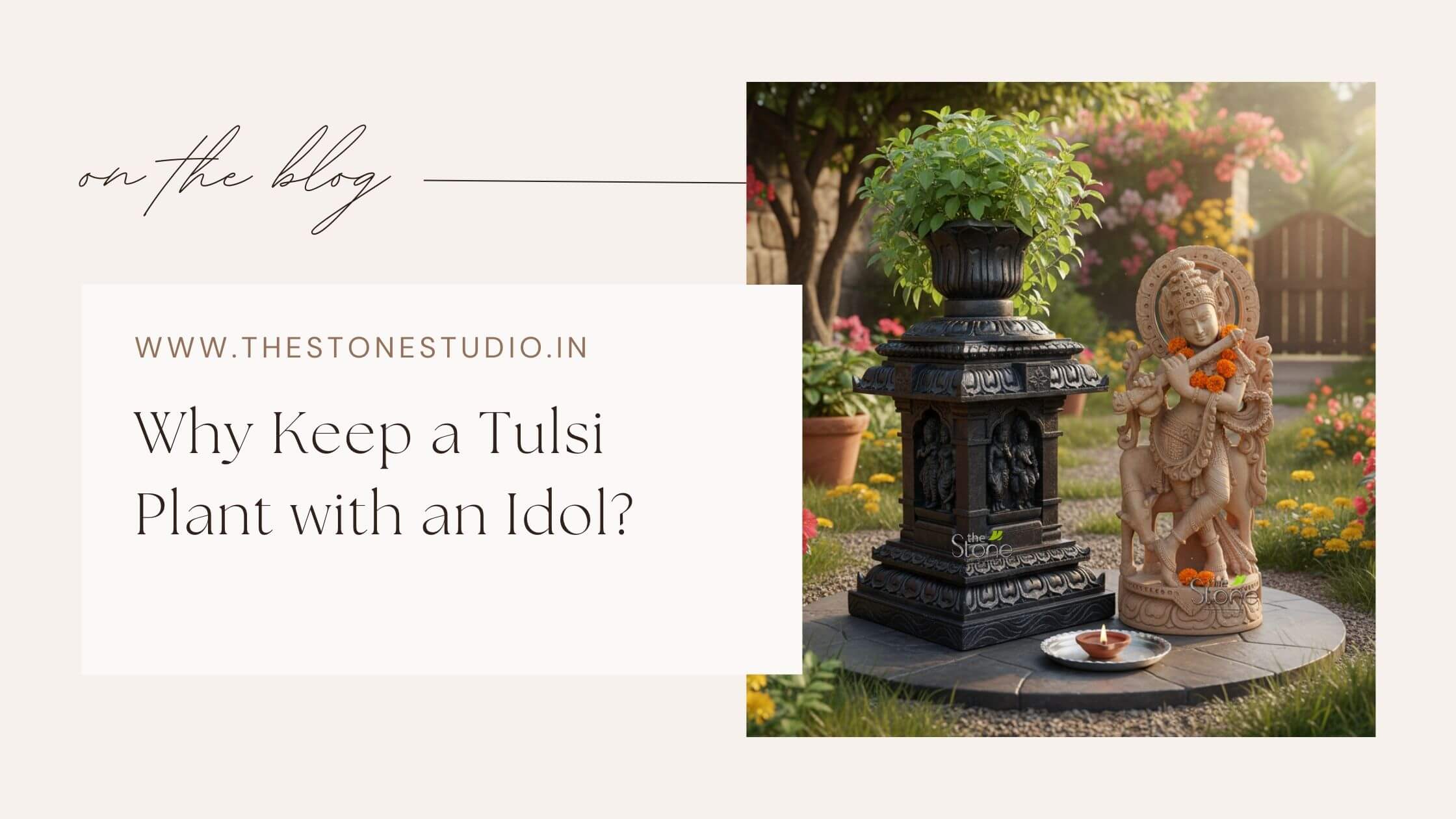
Commonly placed near Tulsi are idols of Lord Krishna, Vishnu, Narayana, or Shaligram, as well as symbolic representations like a diya or lotus. These figures are believed to harmonize with the energy of the Tulsi plant, creating a more enriching spiritual experience.
Best Place to Keep Tulsi Planters (As per Vastu Shastra)
Vastu Shastra emphasizes the significance of Tulsi placement within the home. Ideally, Tulsi should be positioned in the North-East (Ishanya) direction, which is regarded as the most spiritually charged area of a dwelling. This placement promotes clarity, wisdom, and a stronger connection to the divine.

Additionally, the East direction is highly advantageous, as it welcomes the morning sun and enhances positive energy (prana). A Tulsi planter situated in the East contributes to a sense of freshness, vitality, and overall growth within the household.
Locations such as courtyards, open verandas, terraces, or balconies that receive ample natural sunlight are excellent for cultivating Tulsi. It’s important to ensure that Tulsi is placed where there is a free circulation of air and light, avoiding dark or enclosed spaces.
Designing a Spiritual Tulsi Planter Corner with Idol: Best Ideas
Traditional Courtyard Setup
In traditional homes, a Tulsi Vrindavan, typically constructed from black stone, marble, or sandstone, is commonly positioned at the center or in the corner of the courtyard. This structure often features an idol or a symbolic representation of deities such as Vishnu or Krishna, situated behind or above the planter.

To enhance this sacred space, consider incorporating the following elements: –
- Oil lamps (diyas): Lighting these during the morning and evening adds a warm ambiance.
- Rangoli or kolam designs: Creating intricate patterns around the base can beautify the area.
- Brass bells or hanging diyas: Placing these nearby introduces a musical and visual element.
This arrangement not only beautifies the home but also fosters a serene, temple-like atmosphere.
Modern Home & Apartment-Friendly Ideas
In modern homes where space is often limited, it’s still possible to create a beautiful Tulsi–idol combination. Utilizing a compact stone or fibre Tulsi planter alongside a small idol positioned on a raised platform is an excellent solution for balconies and patios.

To achieve a harmonious blend of spirituality and contemporary design, consider employing minimalist aesthetics characterized by clean lines and neutral color palettes. Incorporating wall-mounted back panels featuring subtle carvings, along with soft lighting or wooden frames, can enhance the overall elegance of the setup while minimizing visual clutter. This approach allows for a serene and stylish expression of faith in contemporary living spaces.
Best Statues for Keeping With Tulsi Planter
Here are some of the best god statues that can be paired with a Tulsi Vrindavan planter, keeping in mind the spiritual significance and aesthetic appeal:
Lord Krishna: Lord Krishna is deeply associated with Tulsi. Tulsi is considered very dear to Krishna, and offerings to him are often accompanied by Tulsi leaves. Placing a Krishna statue near a Tulsi Vrindavan creates a beautiful and highly auspicious devotional space.

Goddess Lakshmi: Lakshmi is the goddess of wealth and prosperity, and Tulsi is also believed to attract positive energy and abundance. Pairing them together can symbolize spiritual and material well-being.
Lord Vishnu: Tulsi is considered the beloved consort of Lord Vishnu in many traditions (as Vrinda, who was transformed into the Tulsi plant). Worshipping Vishnu with Tulsi is highly revered.
Radha-Krishna: The divine couple Radha and Krishna represent ultimate love and devotion. Since Tulsi is sacred to Krishna, having Radha-Krishna near the planter enhances the devotional atmosphere manifold.
Ganesha: Although Tulsi is not traditionally offered to Ganesha (there’s a Puranic story where Tulsi offends Ganesha), placing a Ganesha statue nearby is still common for auspiciousness and to remove obstacles before any puja or spiritual practice.
FAQs
Can I keep an idol directly inside the Tulsi planter?
Traditionally, idols are placed near or behind the Tulsi planter, not inside the soil. This maintains respect and balance.
Is Tulsi suitable for apartments without courtyards?
Yes. Balconies, terraces, and well-lit windows are perfectly suitable if they receive sunlight.

Which idol is best to keep with Tulsi?
Idols of Krishna, Vishnu, Narayana, Shaligram, or symbolic representations like a diya or chakra are considered ideal.
Can I keep more than one Tulsi plant?
Yes. Multiple Tulsi plants are auspicious, as long as they are healthy and well-maintained.
What if Tulsi dries or wilts?
A wilting Tulsi plant is considered a sign to reassess care, placement, and cleanliness. Replace respectfully if needed.
Do I need to perform rituals daily?
Rituals need not be elaborate. Even watering, lighting a lamp, or offering a silent prayer is sufficient.
A combination of Tulsi Plant and Idol is more than décor—it is a living spiritual practice. It brings together devotion, nature, discipline, and peace into one sacred space. Whether grand or minimal, traditional or modern, this spiritual corner becomes a place where the home breathes, heals, and connects with the divine.
At The Stone Studio, Tulsi planters and deity idols are crafted to honor this sacred relationship—designed to fit both courtyards and contemporary homes while preserving timeless spiritual values. A home with Tulsi is blessed. A home with Tulsi and the Divine is protected, balanced, and alive.

Explore The Stone Studio’s unique collections to get customized Tulsi statues or your personal Altars & Home Entrances!