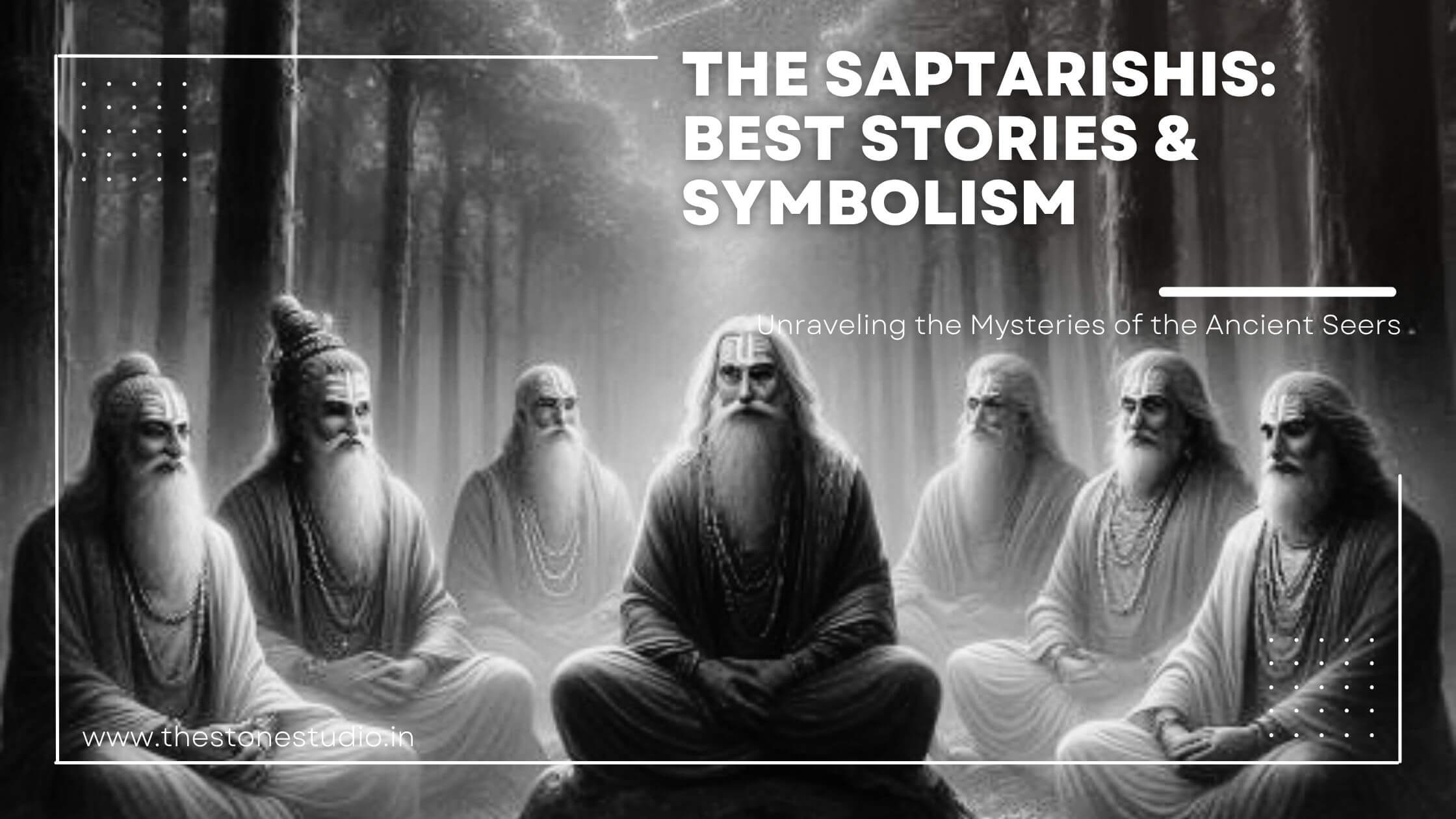
The Saptarishis: Best Stories & Symbolism
Table of Contents
Saptarishis Explained: Origins, Legends, and Their Role in Hindu Mythology
In the vast tapestry of Indian spiritual custom, the Saptarishis (Seven Great Sages) hold a timeless and respected position. They are not just wise figures from the past, they are cosmic beings who represent eternal wisdom and serve as torchbearers of dharma (righteousness). Frequently mentioned in the Rigveda, Upanishads, and various Puranas, the Saptarishis are regarded as the divine transmitters of Vedic knowledge, yoga, astrology, Ayurveda, and spiritual practices that guide humanity.
Who Are the Saptarishis?

The term “Saptarishi” is derived from two Sanskrit words: sapta (meaning “seven”) and rishi (meaning “sage” or “seer”). The Saptarishis are considered the mind-born sons of Brahma, the Creator, and they hold the highest status among sages, known as Brahmarshis.
The Classical Saptarishis, as mentioned in the Rigveda and other ancient texts, are:
- Atri
- Bharadvāja
- Gautama
- Jamadagni
- Kashyapa
- Vashistha
- Vishvamitra
The list of Saptarishis varies across different yugas (cosmic ages), as described in texts such as the Mahabharata and the Puranas. Each Manvantara (a cosmic cycle headed over by a Manu) features its own set of Saptarishis, thereby ensuring the continuity of dharma.
The Origin of the Saptarishis: Mind-born Sons of Brahma
In the beginning, when the cosmos was a vast ocean of possibility, Brahma, the Creator of the Hindu trinity (Trimurti), appeared from the cosmic lotus that arose from Vishnu’s navel. Brahma’s divine task was to settle the universe and establish the cycles of creation, preservation, and dissolution.
Before creating beings for the material world, Brahma aimed to bring forth principles of divine wisdom to guide future generations in maintaining cosmic balance. For this sacred purpose, he created seven sages known as the Saptarishis, directly from his mind, thus, they are referred to as manasaputras or mind-born sons.
Why Were Saptarishis Born?
The Saptarishis were not created for normal procreation, instead, their purpose was to communicate eternal truths (Sanatana Dharma). They were infused with:
- Brahma Gyana (knowledge of the Absolute)
- The power of tapas (spiritual austerity)
- The mission to write, transmit, and preserve the Vedas
- The responsibility to guide the devas (gods), asuras (demons), and humans alike
As a result, they became the first spiritual teachers of the universe—immortal beings who exceeded the mortal plane and lived in higher realms like Mahar Loka.
Symbolism of the Saptarishis

The Saptarishis, a respected group of seven sages, represent not only deep wisdom but also the complicated tapestry of cosmic order and balance that pervades the universe. They are symbolic of several interconnected elements within both spiritual and scientific realms:
- Chakras of Energy: Each sage corresponds to one of the seven chakras, or energy centers, in yogic philosophy, symbolizing various aspects of human consciousness and spiritual awakening. These energy centers govern not only physical vitality but also emotional and spiritual well-being, anchoring the essence of life itself.
- Celestial Stars: In the realm of astronomy, the Saptarishis align with the seven stars of the Big Dipper (Ursa Major) constellation, their brilliance brightening the night sky. Each star serves as a radiant symbol of a sage, collectively guiding seekers through the cosmic journey of existence.
- Pranic Winds: The sages also represent seven vital pranic winds, or spiritual impulses, which are essential for directing human evolution. These winds act as currents of life force, propelling individuals toward enlightenment and deeper understanding of the universe.
- Directions of Dharma: They express the seven directions of dharma—North, South, East, West, Upward, Downward, and Within—each representing a pathway toward ethical living and spiritual fulfillment. Their teachings inspire humanity to embrace these diverse paths, promoting harmony within and around us.
The presence of the Saptarishis is believed to stabilize the cosmos, with each sage overseeing a unique realm of creation or spiritual evolution. In this way, they not only represent ancient wisdom but also function as guardians of balance in the intricate design of existence, guiding us toward a deeper connection with the universe and ourselves.
Head over to The Stone Studio to explore our stunning range of Goddess statues and other Godly Figures, expertly crafted to enhance the beauty of your home and garden!
www.thestonestudio.in
Download Our Free Brochure Here!
Stories and Legends of the Saptarishis
Vashistha and Vishvamitra: A Tale of Rivalry and Realization
Vashistha was a divine sage created from Brahma’s mind and served as the custodian of divine wisdom. Vishvamitra, a king who transformed into a sage, once attempted to seize Vashistha’s divine cow, Kamadhenu, which sparked a bitter rivalry between them. However, after enduring many trials, Vishvamitra lost his ego, performed intense austerity (tapas), and eventually attained the status of Brahmarshi, thereby becoming one of the Saptarishis.
Atri and Anasuya: The Couple of Purity
Atri was married to Anasuya, renowned for her chastity. The story goes that Brahma, Vishnu, and Shiva came to test her purity and were transformed into babies by her spiritual powers. Atri later returned and restored their original forms, resulting in the divine trinity being born as her sons—Dattatreya, Chandra, and Durvasa.
Kashyapa: Father of All Creatures
Kashyapa was the forerunner of many races, including Devas, Asuras, Nagas, and all living beings. His wives, who were the daughters of Daksha, gave birth to different species, establishing him as the cosmic patriarch of life on Earth.
Bharadvāja: Sage of Learning and Ayurveda
Bharadvāja is credited with the propagation of Ayurveda and military sciences. He is regarded as one of the original sages who received knowledge from Indra and passed it on to future generations. His lineage includes Dronacharya, the martial guru from the Mahabharata.
Saptarishis and Vedic Literature

The Saptarishis are credited with composing many hymns of the Rigveda, the oldest known scripture. Each sage had their own lineage of disciples (gotras) and made significant contributions in various areas:
- Spiritual hymns that praise cosmic elements.
- Philosophical doctrines found in the Upanishads.
- Ritual practices are detailed in the Brahmanas and Aranyakas.
- Moral and ethical frameworks are presented in later Puranic texts.
Their teachings laid the foundation for Sanatana Dharma, which continues to influence Hinduism today.
Contribution to Yoga and Spiritual Sciences
While Patanjali is often credited with compiling the Yoga Sutras, the origins of yoga philosophy trace back to the Saptarishis. Vashistha authored the Yoga Vashistha, a profound dialogue between him and Lord Rama that explores Jnana Yoga, or the Path of Knowledge. Atri and Kashyapa were early advocates of mantra yoga and tantric practices. Sage Bharadvāja’s connection with Ayurveda links yogic breath control with health sciences.

These sages delved into concepts such as pranayama, samadhi, tapasya, and self-realization long before these ideas were formally codified. Their lives exemplified the ideals of yoga, including austerity, detachment, knowledge, and universal compassion.
Worship and Cultural Significance
Although the Saptarishis are not worshipped as deities in temples, they are revered in several ways:
1. Rishi Panchami: Celebrated the day after Ganesh Chaturthi, this festival honors the purity and knowledge of the Saptarishis.
2. Gotra Lineage Rituals: Many Hindus trace their ancestry to one of the Saptarishis and perform rituals in their honor accordingly.
3. Ashrams and Temples: Various ashrams and temples across India, such as those in Haridwar, Naimisharanya, and Tamil Nadu, are dedicated to their memory and meditation practices.
4. Saptarishi Mandal (Ursa Major): This constellation is used in Vedic astrology and nakshatra systems to calculate life events and one’s destiny.
Modern Relevance of the Saptarishis
In the spiritual realm, the Saptarishis are regarded as eternal guides who exist in higher dimensions, known as Mahar Loka. They oversee humanity and occasionally reincarnate to assist seekers on their journeys. Many yogis and spiritual masters report experiencing visions or receiving blessings from the Saptarishis during deep meditation or samadhi.
Their teachings continue to be significant in several areas, including:
- Mind-body balance
- Ecological wisdom, exemplified by Kashyapa’s reverence for all forms of life
- Inner transformation through the principles of dharma and tapas
The Saptarishis are more than just figures from mythology; they represent the very best of what we can achieve as humans! Their stories beautifully blend intellect and intuition, discipline and kindness, as well as our earthly duties and our connection to the universe. When we honor the Saptarishis, we’re really celebrating our own journey from ignorance to wisdom.
Whether you’re a yogi, a student, or just someone on a journey of discovery, learning about the Saptarishis helps you feel part of a long-lasting spiritual tradition that has guided people for ages. They serve as a timeless guide that leads us toward the truth.
FAQs
Where do the Saptarishis reside?
The Saptarishis are believed to reside in the heavens, specifically within the constellation Ursa Major (Big Dipper), known in India as the Saptarishi Mandala.
Are the Saptarishis immortal?
In Hindu cosmology, the Saptarishis change with each Manvantara (cosmic epoch). While the role of “Saptarishi” remains eternal, the individual sages may vary across different yugas.
Are Saptarishis mentioned in the Vedas?
Yes, the Saptarishis are mentioned in various Vedic texts and hymns. Many hymns are attributed to individual Rishis who composed the mantras under divine inspiration.
What does Saptarishi Mandala refer to?
Saptarishi Mandala refers to the celestial group of stars representing the seven sages, identified with the Big Dipper constellation in the northern sky.
Is Maharishi Vashistha one of the Saptarishis?
Maharishi Vashistha is one of the most prominent Saptarishis, known as the royal priest of King Dasharatha, the father of Lord Rama.
How are the Saptarishis related to Hindu astrology?
The Saptarishis are linked to specific nakshatras, cosmic cycles, and spiritual influences in Vedic astrology. Their role represents timeless guidance and wisdom.

Explore The Stone Studio’s unique collections to get customized Saptarishis and other Hindu Gods for your personal Altars & Temples!