
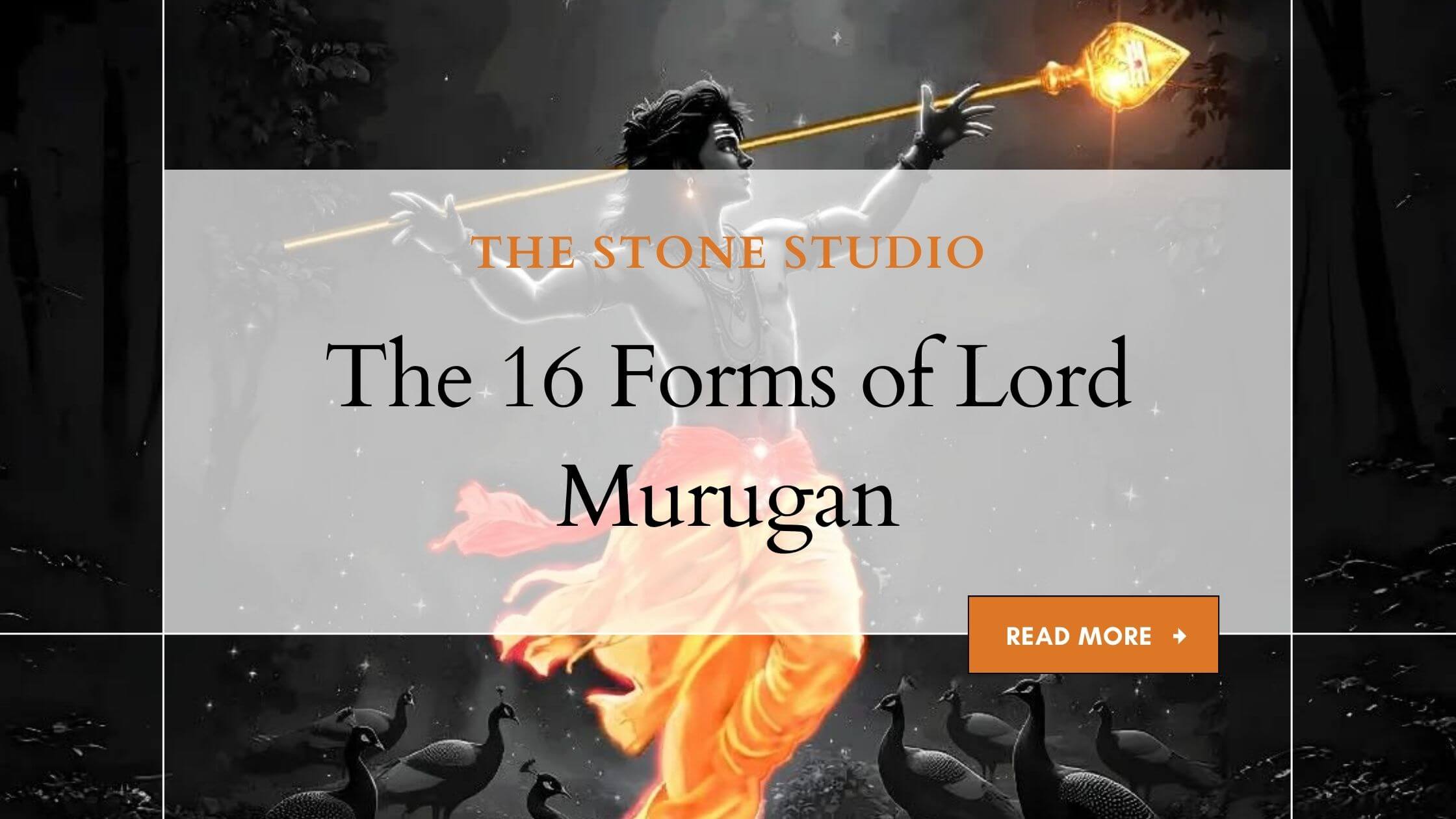
The 16 Forms of Lord Murugan
The 16 forms of Lord Murugan, known as Shodasha Roopam, reveal the diverse divine aspects of the Hindu God of War, Wisdom, and Victory. Lord Murugan is also referred to as Kartikeya, Skanda, Subramanya, and Shanmuga, and he holds a special place in the hearts of millions of devotees across Tamil Nadu, Kerala, Karnataka, Sri Lanka, and the global diaspora.
Each of these 16 forms carries unique symbolism, stories, and spiritual significance. For example, Bala Murugan represents the innocent child deity, while Shaktivel Murugan is the powerful warrior blessed with Goddess Parvati’s Vel. Guhan symbolizes the indwelling Lord who resides in every heart. Worshipping these forms is believed to bring blessings of protection, wisdom, courage, love, prosperity, and spiritual liberation.
In this comprehensive guide, we will explore the stories behind each form of Murugan, the deeper symbolism that they represent, and how they are traditionally worshipped. We will also highlight famous Murugan temples across India and beyond, that are dedicated to these forms. Whether you are a devotee seeking blessings or a spiritual seeker wanting to understand Murugan’s significance, this article will serve as a complete reference to the 16 forms of Murugan and their power.
Table of Contents
1. Bala Murugan (Child Murugan)
Bala Murugan represents the child form of the Lord, radiating innocence, purity, and divine charm. This form is cherished for its simplicity and playful nature, reminding devotees of the untainted devotion that a child has towards the divine.

According to tradition, Bala Murugan blesses children with health, protection, and good values. Parents pray to this form to ensure that their children grow up with wisdom and virtue.
The Bala Murugan Temple in Siruvapuri, Tamil Nadu, is a renowned pilgrimage site where devotees seek his blessings for their children’s well-being.
2. Vela Murugan
Vela Murugan is known as a powerful protector, often depicted with his divine spear, the Vel. This weapon, gifted by Goddess Parvati, symbolizes divine knowledge and the ability to cut through ignorance and negativity.
The story of Surapadman’s defeat features Murugan using the Vel to destroy evil forces, making this form a symbol of courage and righteousness.

Worshippers frequently seek Vela Murugan’s blessings when facing obstacles or dangers in life. The Thiruchendur Murugan Temple stands as a grand testament to this triumphant form.
3. Shaktivel Murugan
Shaktivel Murugan symbolizes the unification of divine energy (Shakti) with Murugan’s warrior spirit. In this context, the Vel is not merely a weapon; it represents the strength and blessings of Goddess Parvati. This form of Murugan is invoked to help overcome significant challenges and inner weaknesses. The Palani Murugan Temple is particularly renowned for its rituals dedicated to Shaktivel Murugan, where devotees carry Vel Kavadi during festivals as an act of devotion and penance.
4. Singaravelan
Singaravelan, meaning “beautiful Vel-bearer,” represents Murugan in his most enchanting and graceful form. This aspect is celebrated in Tamil devotional poetry, where he is praised for his divine beauty and compassionate nature.

The charm of Singaravelan inspires love, unity, and harmony among devotees. Prayers to this form are often offered by those seeking love, marital bliss, and happiness in relationships.
The Siva Subramaniya Swami Temple in Fiji also venerates Murugan in this form, attracting devotees from around the world.
5. Swaminatha Swami
Swaminatha Swami represents Murugan as the great teacher or Guru. According to legend, when Lord Shiva asked him the meaning of the sacred Pranava (Om), Murugan revealed its true essence, thus becoming the Guru even to his father.
This form is especially revered by students, spiritual seekers, and anyone pursuing higher knowledge.

The Swamimalai Temple in Tamil Nadu is dedicated to this aspect of Murugan, where the sanctum is located on a small hill, symbolizing a higher seat of wisdom.
6. Shanmuga (Six-Faced Murugan)
Shanmuga, the six-faced deity, is one of Murugan’s most iconic representations. Each of the six faces symbolizes divine qualities such as wisdom, love, power, glory, patience, and detachment.

This form originated when Murugan was created to defeat the demon Surapadman, with each face possessing a unique vision and purpose. Shanmuga is worshipped for all-around blessings, protection, and success in various aspects of life.
Major temples, such as Thirupparankundram and Swamimalai, prominently honor him in this form.
7. Dandayudhapani (Palani Murugan)
Dandayudhapani is the renunciate form of Murugan, depicted holding only a staff (Danda) and dressed as an ascetic. According to the story, after a disagreement over the divine fruit of wisdom,
Murugan renounced worldly life and chose to reside in the Palani Hills, embracing simplicity and detachment. Worshippers come to Dandayudhapani seeking liberation from material attachments and guidance in spiritual discipline.

The Palani Murugan Temple is one of the most visited pilgrimage centers in South India for this form.
8. Kumara
In his Kumara form, Murugan represents eternal youth, valor, and leadership. As the commander of the celestial army, Kumara embodies fearlessness and energy, inspiring courage and ambition in his devotees.

This form is especially significant for young people who aspire to excel in leadership roles or overcome their fears.
The Kumara Kovil in Tamil Nadu is dedicated to this form and is revered for bestowing blessings of strength and vitality.
9. Subramanya
Subramanya is recognized as the supreme commander of the Devas and is revered as a destroyer of negativity and an upholder of dharma.
In southern traditions, particularly in Karnataka and Kerala, Subramanya is closely associated with serpent worship, symbolizing protection from toxic influences and diseases.

Devotees flock to the Kukke Subramanya Temple in Karnataka to seek relief from serpent doshas and to ensure family prosperity.
10. Deivayanai Kalyana Murugan
In another form, Murugan is depicted as the divine bridegroom married to Deivayanai, the daughter of Lord Indra. Their union symbolizes the harmony between divine will (Deivayanai) and divine action (Murugan).

The story narrates that after defeating Surapadman, Murugan married Deivayanai as a reward from Indra. Devotees worship this form to strengthen marital bonds and seek blessings for a prosperous marriage.
The Thirupparankundram Temple celebrates this form extensively during festivals.
11. Valli Kalyana Murugan

Valli Kalyana Murugan represents the marriage of Murugan to Valli, a tribal princess. Their love story is filled with trials and divine interventions, symbolizing devotion and the triumph of love over obstacles. Valli’s unwavering devotion inspires devotees to remain steadfast in their faith. Praying to this form is believed to bless love marriages and help remove hurdles in finding a life partner. The Vallimalai Temple in Tamil Nadu is renowned for this aspect of worship.
12. Valli Deivayanai Sametha Murugan
In this form, Murugan is depicted alongside both of his consorts, Valli and Deivayanai. This representation exemplifies the perfect balance of love (Valli) and duty (Deivayanai).
Their union signifies the integration of spiritual pursuits with worldly responsibilities. Worshiping this form is believed to bring overall harmony to family life and prosperity in both personal and professional spheres.

The Tiruttani Murugan Temple is well-known for celebrating this aspect of Murugan’s story.
13. Guhan
Guhan represents the indwelling Lord who resides in the hearts of his devotees as their constant companion and guide. This form highlights Murugan’s intimate connection with his followers, helping them navigate life’s challenges from within. In

Tamil devotional hymns, he is often referred to as “the friend who dwells within.” Devotees worship Guhan to achieve inner peace, self-realization, and an unbreakable spiritual bond with the divine.
The Sikkal Singaravelan Temple is particularly significant for this form.
14. Saravana Bhava
Saravana Bhava refers to Murugan’s origin at the Saravana Poigai lake, where he was born from the divine sparks of Lord Shiva’s third eye. Raised by the six Krittikas, he grew into a powerful warrior who defeated the demon Tarakasura.
This form symbolizes purity, divine grace, and the power of new beginnings. Chanting the name “Saravana Bhava” is considered highly auspicious for spiritual renewal.

The Saravana Poigai near Palani is an important site associated with this form.
15. Velan
Velan represents Murugan in his simple, rustic, and accessible form, especially worshipped in rural Tamil Nadu. He is depicted as a protector of villages, agricultural prosperity, and community harmony. Folk traditions celebrate Velan with grand festivities, music, and dance. This form emphasizes Murugan’s closeness to the common people and his role as a guardian of their livelihoods. Numerous village shrines across Tamil Nadu honor Velan with seasonal festivals.
16. Kanda Puranar
Kanda Puranar portrays Murugan as the living embodiment of the Skanda Purana, the sacred text that narrates his life and teachings. This form represents divine wisdom, dharma, and righteous living. Worshippers seek his blessings to lead a morally upright and spiritually fulfilling life. Temples such as Thirupparankundram and Swamimalai honor this form through recitations of the Skanda Purana and elaborate rituals during festivals.
Head over to The Stone Studio to explore our stunning range of Lord Murugan statues and other Godly Figures, expertly crafted to enhance the beauty of your home and garden!
www.thestonestudio.in
Download Our Free Brochure Here!
The 16 forms of Murugan are more than mere depictions of a single deity, they are vibrant representations of divine energies that guide devotees through every stage of life. Bala Murugan represents innocence and devotion, Shanmuga embodies courage and wisdom, Swaminatha Swami blesses seekers with knowledge, and Valli–Deivayanai Sametha Murugan teaches the balance of love and duty.

Understanding the symbolism and stories behind these forms deepens one’s connection with Lord Murugan and helps devotees worship him according to their specific life needs. Visiting renowned Murugan temples such as Palani, Thiruchendur, Swamimalai, Thirupparankundram, and Kukke Subramanya can be a spiritually transformative experience, allowing devotees to witness these forms in their full grandeur.
By meditating on these 16 forms, chanting sacred mantras like “Om Saravana Bhava,” and participating in festivals such as Thaipusam and Skanda Sashti, devotees can invite Murugan’s grace into their lives. His blessings not only remove obstacles and protect against negativity but also inspire inner strength, righteous living, and spiritual awakening.
FAQs
1. What are the 16 forms of Lord Murugan?
The 16 forms of Lord Murugan, also called Shodasha Roopam, are: Bala Murugan, Vela Murugan, Shaktivel Murugan, Singaravelan, Swaminatha Swami, Shanmuga, Dandayudhapani, Kumara, Subramanya, Deivayanai Kalyana Murugan, Valli Kalyana Murugan, Valli Deivayanai Sametha Murugan, Guhan, Saravana Bhava, Velan, and Kanda Puranar. Each form represents a unique aspect of Murugan’s divine qualities, stories, and blessings.
2. Which is the most powerful form of Murugan?
All 16 forms of Murugan are powerful in their own way, but Shaktivel Murugan and Shanmuga are often seen as especially strong. Shaktivel Murugan holds the Vel, which is the main symbol of wisdom and protection. Shanmuga’s six faces show full divine vision and the strength to overcome any challenge.
3. How are the 16 forms of Murugan worshipped?

Devotees worship each form according to its significance. For example, Bala Murugan is worshipped by parents for children’s well-being, Vela Murugan for protection, Swaminatha Swami for knowledge, and Valli–Deivayanai Sametha Murugan for family harmony. Offerings include milk, honey, flowers, and chanting mantras like Om Saravana Bhava or Kanda Sashti Kavasam, especially on Tuesdays, Fridays, and Sashti days.
4. What is the significance of the Vel in Murugan’s worship?
The Vel is Murugan’s holy spear, given by Goddess Parvati. It stands for wisdom, spiritual understanding, and the ability to get rid of ignorance and negativity. Worshipping Shaktivel Murugan with flowers and by taking part in Kavadi Yatra is thought to be very helpful for removing problems.
5. Which are the most famous temples dedicated to Murugan’s 16 forms?
Some famous temples that celebrate the different forms of Murugan include:
- Palani Murugan Temple (Dandayudhapani)
- Thiruchendur Murugan Temple (Vela Murugan)
- Swamimalai Temple (Swaminatha Swami)
- Thirupparankundram Temple (Deivayanai Kalyana Murugan)
- Kukke Subramanya Temple (Subramanya)
- Vallimalai Murugan Temple (Valli Kalyana Murugan)
- Tiruttani Murugan Temple (Valli Deivayanai Sametha Murugan)
6. Why is Murugan also called Skanda or Kartikeya?
Murugan is called Skanda in Sanskrit, which means “the one who spilled forth,” because he was created from Lord Shiva’s power. In North India, people often call him Kartikeya because he was raised by the six Krittika stars.
7. Which festivals are best to worship all 16 forms of Murugan?
Major festivals include Thaipusam, Skanda Sashti, and Panguni Uthiram. During these times, parades and special prayers are held in Murugan temples, letting worshippers honor many forms of Murugan at once.

Explore The Stone Studio’s unique collections to get customized Murugan Statues for your personal Altars & Garden decor!


