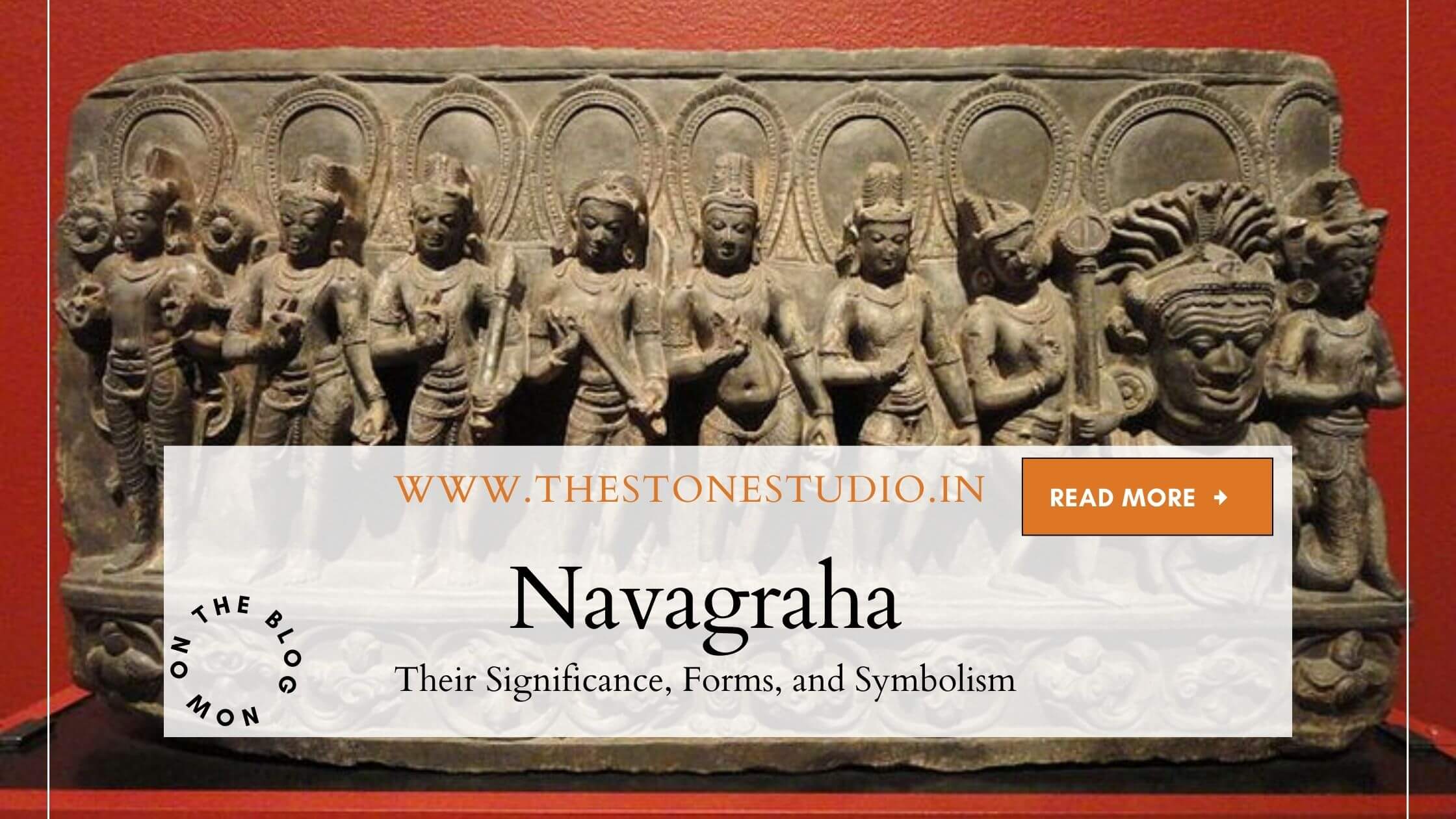
Navagraha Significance, Forms, and Symbolism
Table of Contents
The Nine Planets: The Divine Celestial Gods
The Navagrahas, a respected ensemble of nine celestial deities, hold deep importance within the realms of Hinduism, Vedic astrology, and the intricate designs of temple architecture. The term ‘Navagraha’ originates from the Sanskrit words ‘Nava,’ meaning nine, and ‘Graha,’ which translates to planet or seizer, embodying the cosmic forces that wield influence over human existence, fate, and the intricate web of karma.
These deities—each representing a specific planet—are revered in nearly all Hindu temples, often depicted in elaborate carvings or as distinct idols, inviting both individual worship and collective reverence. Devotees seek their divine blessings to harmonize their lives and balance planetary doshas, the negative effects that can disrupt one’s path. Through rituals, prayers, and offerings, followers aim to invoke the grace of the Navagrahas, hoping to bring balance and positivity into their daily lives while acknowledging the divine interplay that governs their destinies.
Origin of Navagraha
The concept of Navagraha is steeped in ancient Vedic scriptures, notably the Rigveda and the Atharvaveda, where celestial bodies were not merely astronomical phenomena but were revered as divine entities infused with celestial significance.

According to Hindu mythology, these nine celestial deities, known as the Navagrahas, were thoughtfully created by Lord Brahma, the architect of the universe, to uphold the delicate balance of cosmic order. Each of these planetary figures manages a distinct aspect of human existence, exerting deep influence over the fate of individuals through their astrological alignments.
Their distinct energies are believed to shape personal characteristics, life experiences, and even relationships, making the study of these celestial influencers a central focus in the realm of astrology.

The Navagraha (Nine Planets) and Their Symbolism
Surya (Sun)
Significance: Surya, the chief of the Navagrahas, symbolizes power, health, and vitality. Worshiping him is believed to eliminate ignorance, bringing clarity and insight, while enhancing physical and mental strength.
Symbolism: Surya is depicted riding a chariot pulled by seven horses, each representing a color of light and the seven days of the week, signifying the sun’s daily journey.
Vahana (Vehicle): Aruna, the personification of dawn, drives Surya’s chariot, symbolizing renewal and new beginnings.

Day: Sunday is dedicated to Surya, seen as a time for strength, growth, and spiritual practice.
Gemstone: Ruby, with its vibrant red color, is Surya’s gemstone, believed to boost confidence, leadership, and vitality.
Chandra (Moon)
Significance: Chandra is a powerful symbol of emotions, the mind, and mental well-being. A strong Moon fosters peace and prosperity in our lives, while understanding an afflicted Moon can help us navigate mood swings and instability more effectively.

Symbolism: Chandra is often illustrated riding an antelope, representing gentleness and adaptability, qualities that can enhance our emotional resilience.
Vahana: Antelope
Day: Monday
Gemstone: Pearl
By recognizing the influence of Chandra, we can work towards cultivating a harmonious state of mind and emotional balance.
Mangala (Mars)
Significance: Mars is known as the planet associated with energy, courage, war, and ambition. It influences qualities such as determination, discipline, and aggression.
Symbolism: In various traditions, Mars is often depicted as a warrior riding a ram, symbolizing its martial characteristics.
Vahana: The ram serves as the vehicle (vahana) for Mars, representing its dynamic and assertive nature.

Day: Tuesday is recognized as the day of Mars, often considered auspicious for activities related to courage and action.
Gemstone: Coral is the gemstone associated with Mars, reflecting its vibrant energy and strength.
Budha (Mercury)
Significance: Budha represents the qualities of intelligence, communication, wit, and business acumen. A strong influence from Mercury is believed to enhance one’s speech and intellectual capabilities.

Symbolism: Budha is often depicted riding a lion, which symbolizes intelligence and agility.
Vahana: The lion serves as Budha’s vehicle (Vahana).
Day of the Week: Wednesday is associated with Budha.
Gemstone: The gemstone linked to Budha is the emerald, valued for its beauty and significance.
Brihaspati (Jupiter)
Significance: Jupiter, known as Brihaspati in Vedic astrology, symbolizes wisdom, knowledge, spirituality, and prosperity. It is regarded as the planet of teachers and spiritual guides, emphasizing the importance of learning and understanding in one’s life.
Symbolism: In various depictions, Jupiter is portrayed riding an elephant, a potent symbol of grandeur and wisdom. This imagery highlights its majestic nature and the depth of knowledge it represents.
Vahana: The elephant serves as the Vahana (vehicle) for Jupiter, reinforcing its association with strength and intelligence.

Day: Thursday is dedicated to Brihaspati, making it an auspicious day for seeking knowledge and spiritual growth.
Gemstone: The Yellow Sapphire is the gemstone associated with Jupiter, believed to enhance wisdom and bring prosperity to its wearer.
Shukra (Venus)
Significance: Venus, known as Shukra, is associated with love, beauty, luxury, and interpersonal relationships. A well-placed Venus in one’s astrological chart can enhance creativity and lead to success in artistic endeavors.

Symbolism: Venus is often depicted riding a horse, which symbolizes grace and refinement.
Vahana: The vehicle of Venus is the horse.
Day of the Week: Friday is dedicated to Venus.
Gemstone: The gemstone associated with Venus is the diamond, reflecting its qualities of beauty and brilliance.
Shani (Saturn)
Significance: Shani represents justice, discipline, and the principle of karma in astrology. It is often regarded with both respect and apprehension due to its influence on life’s challenges and adversities.
Symbolism: Shani is depicted riding a crow or vulture, which symbolizes the qualities of justice and patience.
Vahana: The associated vehicle is a crow or vulture.
Day: Saturday is designated as the day of Shani.
Gemstone: The gemstone associated with Shani is the Blue Sapphire, believed to harness its energies.

Rahu
Significance: In astrology, Rahu is considered a shadow planet that influences illusions, ambitions, and desires. It is known for its association with sudden changes, fame, and obsessions, often driving individuals to pursue their goals with intensity.

Symbolism: Rahu is symbolically represented as a disembodied head that rides a chariot drawn by dark horses, reflecting its powerful and sometimes unpredictable nature.
Vahana: The mode of transport for Rahu is depicted as a chariot being pulled by dark horses, symbolizing its dynamic and swift energy.
Day: While there is no specific day dedicated to Rahu, it is commonly associated with Saturday.
Gemstone: The gemstone associated with Rahu is Hessonite, also known as Gomedh, which is believed to harness its energies.
Ketu
Significance: Ketu is recognized as a shadow planet that plays a crucial role in spirituality, detachment, and the influences of past karma. It is often associated with the journey towards enlightenment and liberation.
Symbolism: Ketu is usually depicted as a headless figure riding either a vulture or a serpent, highlighting its unique characteristics and associations.
Vahana: The vahana (vehicle) of Ketu is represented by either a vulture or a serpent, which further illustrates its symbolic meaning.

Day of the Week: While there is no specific designated day for Ketu, it is often associated with the energy of Tuesday and Saturday.
Gemstone: The gemstone linked to Ketu is the Cat’s Eye, which is believed to hold special properties related to this celestial body.
Head over to The Stone Studio to explore our stunning range of Goddess statues and other Godly Figures, expertly crafted to enhance the beauty of your home and garden!
www.thestonestudio.in
Download Our Free Brochure Here!
Importance of Navagraha in Hindu Temples

Navagrahas hold significant importance in Hindu temples, reflecting their deep influence on astrology and spiritual life. Their relevance can be outlined as follows:
Karmic Influence: The Navagrahas are believed to play a crucial role in governing human karma, influencing various facets of life including health, wealth, and interpersonal relationships.
Mitigating Doshas: Engaging in the worship of Navagrahas is thought to alleviate the adverse effects associated with certain planetary doshas, such as Shani Dosha, Rahu-Ketu Dosha, and Mangal Dosha.
Balance and Harmony: Seeking blessings from the Navagrahas is believed to foster a balanced and harmonious existence, thereby enhancing success and overall well-being.
Temple Rituals: Numerous temples perform Navagraha Poojas as part of their rituals, aimed at appeasing the planets and improving the fortunes of the devotees.
Astrological Remedies: Individuals encountering challenges in life often visit Navagraha temples to undertake specific remedial rituals intended to mitigate their difficulties.
FAQs
Why are Rahu and Ketu considered shadow planets?
Rahu and Ketu do not physically exist like other planets; instead, they are lunar nodes that influence eclipses and have karmic effects.
Can worshipping the Navagrahas change destiny?
While worship can help mitigate the negative influences of planets, destiny is largely determined by one’s karma. Devotion, prayers, and good deeds can aid in transforming one’s fate.
Are there specific temples dedicated to the Navagrahas?
Yes, there are several Navagraha temples in India, including the Navagraha Temple in Assam and various Navagraha shrines in Tamil Nadu.
What is the significance of Navagraha Homa?
A Navagraha Homa is a fire ritual performed to appease the nine planets. It aims to reduce their malefic effects and enhance their blessings.
How can one strengthen weak planets in their horoscope?
To strengthen weak planets, one can perform Navagraha puja, chant specific mantras, wear gemstones, and engage in charitable activities.

The Navagrahas are not just celestial bodies; they are the guiding forces that shape our destiny, influencing various aspects of our lives—from health and relationships to career and spirituality. Whether you seek to overcome challenges, balance planetary doshas, or invite prosperity, understanding and respecting these cosmic deities can help align your energies with the universe.
By worshiping the Navagrahas, visiting dedicated temples, chanting mantras, or performing rituals, devotees can create a harmonious connection with these celestial influences. While astrology provides insights, it’s ultimately our karma, devotion, and actions that define our path. So, embrace the wisdom of the Navagrahas, seek their blessings, and navigate life with clarity, balance, and spiritual strength.
May the grace of the Navagrahas illuminate your journey, bringing you peace, success, and divine harmony!

Explore The Stone Studio’s unique collections to get customized Navagraha Statues for your personal Altars & Temples!