
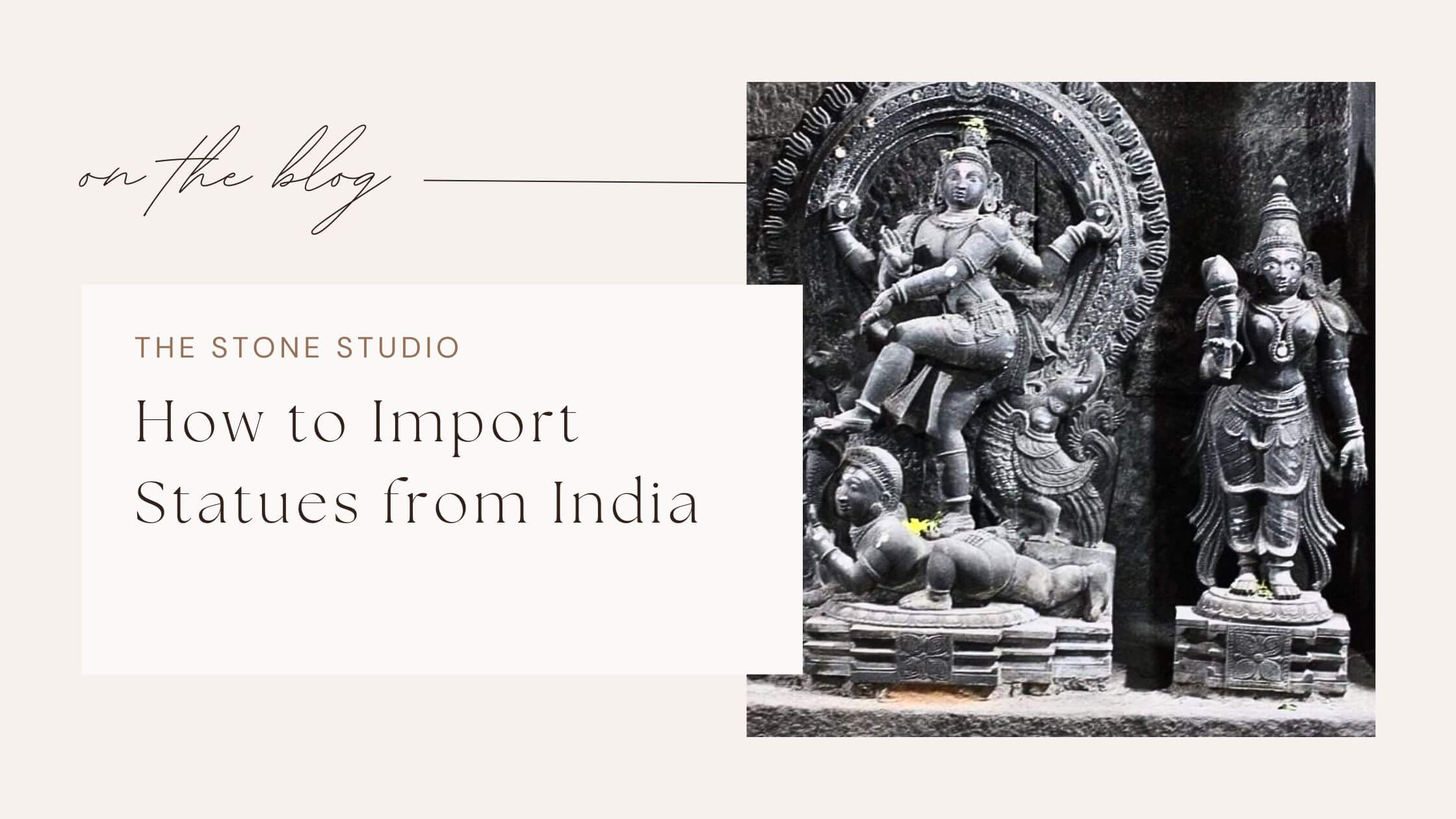
How to Import Statues from India
Table of Contents
How to Import Statues from India: Complete Step-by-Step Guide for Overseas Buyers
India has long stood as a bastion of stone and metal sculpture, a tradition that spans thousands of years. From the breathtaking and detailed carvings of the Khajuraho temples, which depict intricate narratives of love, life, and spirituality, to the divine idols gracing the sacred spaces of South Indian temples, each handcrafted piece represents a profound legacy of ancient artisanship.

This craftsmanship is soaked in spiritual symbolism and marked by artistic precision that few other cultures can rival. In contemporary times, Indian statues and idols have transcended their original religious contexts to become highly desired treasures around the globe.
These magnificent works of art find their place not only in temples and meditation rooms but also as striking focal points in homes, lush gardens, prestigious museums, and luxurious hotels. Their inherent beauty and rich cultural significance invite respect and reflection, enhancing the ambiance of any space they inhabit.
Why Import Directly from India?
When you buy statues directly from Indian artisans or exporters, you:
- Ensure authentic craftsmanship and genuine materials.
- Save on middleman costs and retail markups.
- Receive customized designs that perfectly fit your aesthetic or spiritual needs.
Many first-time international buyers show hesitation due to their unfamiliarity with customs procedures, documentation requirements, and shipping logistics. The Stone Studio effectively addresses this issue by providing comprehensive assistance throughout the entire process, from design selection to final delivery at the client’s location.

This service is applicable for both small and large shipments, whether transported by air or sea. Regardless of whether the item being imported is a delicate 3-inch, meticulously carved idol or a monumental 10-foot stone sculpture, The Stone Studio ensures that every aspect of the export process is managed with the utmost professionalism and expertise.
Step 1 – Identify and Verify a Reliable Supplier
When importing art or sculpture, your first priority is credibility.
Check for:
- Website authenticity & IEC registration (Import-Export Code).
- Experience and client testimonials.
- Social-media presence and verified reviews.

Pro Tip: Work with reputable certified exporters such as The Stone Studio, a company dedicated to managing all aspects of export documentation with precision, care, and a proven track record of global door-to-door delivery.
They ensure that your valuable items are meticulously packaged in secure wooden crates or galvanized boxes, providing an extra layer of protection during transit. Additionally, The Stone Studio prioritizes transparent communication, keeping you informed and updated at every stage of the export process, so you can have complete peace of mind.
Step 2 – Product Selection and Customization
Choose your preferred medium — Stone, Fiber, Marble, Wood, or Brass — based on purpose and placement.
You can specify:
- Height, width, and weight.
- Finish (matte, polished, antique, or natural).
- Pose, pedestal, inscriptions, or deity customization.
- Since each statue is handmade, minor variations are natural — a mark of authenticity, not imperfection.
Prior to dispatch, it is advisable to request photographic or video documentation to confirm the finishing and packaging of the item.
Step 3 – Understanding Export Pricing and Incoterms
When engaging in international commerce, the quotation provided encompasses specific cost elements and responsibilities as delineated by the Incoterms (International Commercial Terms).
Incoterms Overview

EXW (Ex-Works): Under this term, the buyer assumes all responsibility. They are responsible for arranging the pickup, freight, and insurance from the seller’s location.
FOB (Free on Board): This term shares responsibilities between the seller and the buyer. The seller is responsible for loading goods onto the vessel, while the buyer manages the freight, insurance, and customs clearance at the destination.
CIF (Cost, Insurance & Freight): In this arrangement, the seller takes on the responsibility of covering the freight and a minimum level of insurance (as agreed upon) until the goods reach the buyer’s port. The buyer is then responsible for handling local duties upon receipt.
DAP (Delivered at Place): Here, the seller handles the delivery of goods directly to the buyer’s specified location. The buyer is responsible for paying import duties and any local taxes once the items are delivered.
What Is Typically Included in Your Quote?
- Product cost
- Export-grade packaging
- Inland transportation within India
- Export documentation
- Freight and basic insurance (as per agreed incoterms)
What Is Not Included?
- Destination duties, taxes, or local customs clearance (unless under DDP terms)
- Any additional insurance or storage fees at the destination
Understanding these terms can help ensure clarity and smooth transactions in international commerce.
Step 4 – Payment Process & Documentation
When engaging with reputable exporters, clients can expect secure international payment options, including:
- International Credit/Debit Cards
- Bank Wire (TT) / SWIFT Transfer
- Global Multi-currency Accounts
- Fintech platforms for international payments and money transfers

The Stone Studio has Global Multi-Currency accounts, which help minimize conversion fees for clients located in the USA, UK, Canada, Singapore, UAE, European countries, and many other countries.
On dispatch of an export shipment, clients will receive essential documents, including:
- Commercial Invoice– This document details the product specifications and value.
- Packing List – It outlines the packaging dimensions and weights.
- Non-Antique Declaration (if applicable) – This is a certification confirming that the statue is not classified as an antique, which is a mandatory requirement in some cases.
- Air Waybill (AWB) or Bill of Lading (B/L) – This serves as proof of shipment.
Step 5 – Export Procedure from India
Your exporter will take care of:

- Export packaging (custom wooden crates, or galvanized boxes with proper sea or air-worthy export packaging).
- DGFT Shipping Bill filing via Indian Customs.
- Customs clearance at the sea port/airport of origin.
- Booking with an international courier (FedEx, DHL) or a freight forwarder for sea shipments.
Once India Customs issues a Let Export Order (LEO), the goods are cleared for international transport.
Step 6 – Import Procedure in Buyer’s Country
When the shipment arrives at your country’s port or airport:
- The courier or freight agent contacts the consignee (buyer).
- You’ll need to pay applicable customs duties, GST/VAT, import duty, or clearance charges as per your country’s regulations.
- After payment and clearance, delivery is completed to your address (based on Incoterms).
For smaller consignments, FedEx/DHL usually handles customs automatically, making the process smooth for individuals.
Step 7 – Insurance, Risk & Delivery
When shipping valuable or large statues, it is highly recommended to insure the shipment to protect against potential loss or damage.
Upon delivery, make sure to carefully inspect the crate before signing for it. It is also beneficial to record a video or take photos during the unboxing process, as this can serve as evidence for any insurance or courier claims that may arise.

In the event of damage, claims are usually addressed through the shipping company or the insurance provider.
Step 8 – Legal & Cultural Compliance
When exporting sculptures from India, it is essential to obtain a Non-Antique Certificate (required at customs clearance in India). This certificate serves to verify that the artwork complies with the Antiquities and Art Treasures Act of 1972, safeguarding the integrity of cultural heritage.

Additionally, it’s important to remember that the export of materials such as ivory, coral, or animal bone is strictly prohibited, reflecting a commitment to wildlife protection and ethical trade practices.
Furthermore, be aware that certain countries have specific requirements regarding the importation of religious artifacts. It is advisable to thoroughly research local regulations to ensure compliance and avoid any potential legal issues.
FAQs
1. Do I need an import license to bring statues into my country?
For personal or small-quantity shipments, generally no import license is required. For commercial resale, check your country’s import norms.
2. Who pays customs duty in my country?
The buyer/consignee pays the destination duties unless the shipment is on DDP (Delivered Duty Paid) terms.
3. Can I pay in my local currency?
Yes. The Stone Studio accepts payments in USD, EUR, SGD, AED, AUD, and many other currencies via its global banking partners.
4. What is a Non-Antique Certificate, and who provides it?
It’s a legal document declaring the statue is newly made, not antique. It’s issued and signed by the exporter (The Stone Studio) or the relevant authority depending on the nature of the shipment.
5. How long does it take to ship from India?
The shipping time depends on many parameters, like the mode of transport, destination country, and customs clearance speed at both ends. You can check a rough estimate below for different methods of shipments:
Airway (FedEx/DHL): 7–20 working days.
Sea Freight: 25–90 days depending on destination.
Importing handcrafted statues from India can be a straightforward process when partnering with a reliable exporter. The Stone Studio specializes in streamlining this journey, offering comprehensive services that include sculpting, secure packaging, documentation, shipping, and delivery. This ensures that your selected artwork arrives safely and in excellent condition. By choosing authentic Indian craftsmanship, you can enhance your space with unique and culturally rich pieces.
For inquiries or consultation, reach out via www.thestonestudio.in

Explore The Stone Studio’s unique collections to get customized Sculptures for your personal Altars & Garden decor!


