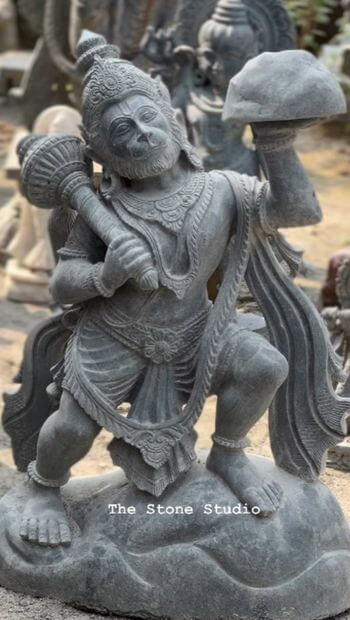
Lord Hanuman stands as one of the most revered deities in Hindu tradition, celebrated as the embodiment of strength (bal), courage (shaurya), protection (raksha), and unwavering devotion (bhakti). Born as the son of Vayu (the wind god) and blessed by Lord Shiva himself, Hanuman is worshipped by millions who seek fearlessness, resilience, and divine support during life’s toughest challenges. His extraordinary role in the Ramayana — carrying the Sanjeevani mountain to save Lakshmana, leaping across the ocean to Lanka, and burning the demon king’s city — makes him the ultimate symbol of selfless service and indomitable willpower. To learn more about his place in the Hindu pantheon alongside other major deities, explore our guide to Hindu gods.
Choosing the right Hanuman statue begins with understanding what each form represents. Different poses channel different energies and blessings, making it essential to select based on your spiritual intention.
Veer Hanuman (Standing with Mace or Flying Pose)
The Veer Hanuman form — standing tall with the gada raised, or depicted in the dynamic flying pose — is the quintessential representation of courage, victory over enemies, and the removal of obstacles. This is the form that warriors and those facing intense life challenges gravitate towards. The right-facing Hanuman is widely considered especially powerful for destroying negative forces, while the left-facing form is associated with gentler, more benevolent blessings. A flying Hanuman (Udta Hanuman) is often placed at entrances or above doorways and symbolises unstoppable momentum, protection during travel, and the ability to overcome any hurdle.
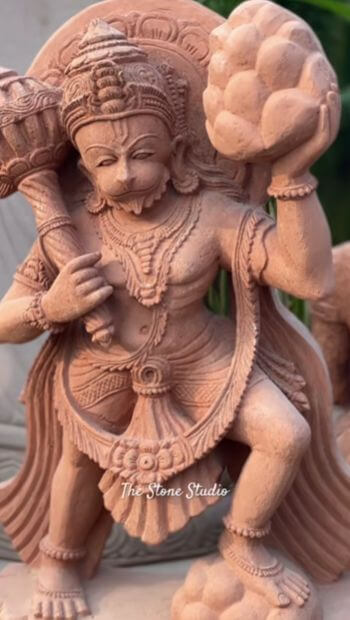
Hanuman with Sanjeevani Parvat
This iconic form shows Hanuman lifting the entire Dronagiri mountain to bring the life-saving Sanjeevani herb for Lakshmana. It symbolises rescue, healing, protection during difficult times, and the willingness to move mountains for loved ones. This form is especially meaningful for families going through health challenges, career crises, or any situation demanding extraordinary effort and divine intervention. Browse our Sanjeevani Parvat Hanuman statues in both marble (3.5ft) and soap stone (12 inch) options.
Panchamukhi Hanuman (Five-Faced)
The Panchamukhi form is considered among the most powerful manifestations of Hanuman. According to the Ramayana, Hanuman assumed this five-faced form — combining the faces of Hanuman, Narasimha, Garuda, Varaha, and Hayagriva — to extinguish five lamps simultaneously and defeat the demon Ahiravana in Patala. Each face protects one of the five cardinal directions, making this form a supreme Vastu remedy for safeguarding home, temple, and office from negativity in all directions. The Panchamukhi form is also believed to remove planetary afflictions (especially those of Saturn and Mars), ward off evil eye, and grant five kinds of blessings — Sri (wealth), Vijaya (victory), Hanumant (courage), Garuda (protection from poison and evil), and Hayagriva (knowledge). Our Panchamukhi Hanuman in black stone (5.5ft) is one of the most sought-after pieces in our collection.
Meditative / Sitting Hanuman
The sitting or kneeling Hanuman — often depicted with folded hands or in a contemplative posture — represents inner peace, humility, focused devotion (bhakti), and surrender to Lord Rama. This calmer form is particularly well-suited for home mandirs and meditation spaces where the devotee seeks spiritual depth rather than outward protection. If you are also considering a meditative deity for your pooja room, you might pair a sitting Hanuman with a Ganesh statue — the remover of obstacles — for a complete devotional setup.
Care and Maintenance
For stone Hanuman statues (black stone, red stone, granite):
- Dust regularly with a soft, dry cloth to prevent buildup
- Occasionally clean with a damp cloth and mild soap — avoid harsh chemicals or abrasive scrubbers that can damage the finish
- For outdoor installations, ensure the statue sits on a solid plinth or pedestal for stability
- Periodically check stability, especially in open gardens or terrace temples exposed to wind and rain
- Sindoor and oil offerings are traditional and generally do not harm stone surfaces, but wipe excess gently
For brass and metal Hanuman idols:
- Polish with a soft cloth to maintain shine
- Use a brass-specific cleaner if tarnishing occurs
- Avoid water accumulation in crevices
For all Hanuman statues:
- Never drag heavy stone idols — always lift with assistance
- Place on a stable, elevated surface (never on the floor)
- Keep the area around the idol clean and clutter-free as a mark of respect
Ready to Find Your Perfect Hanuman Statue?
Browse our collection of handcrafted Hanuman statues, or contact us for a custom creation tailored to your exact specifications.