
Agni Dev: Types, Origin & 5 Symbolism
In Hinduism, Agni Dev(अग्नि) is the god of fire and plays an important role. He is one of the key deities in the Vedic tradition. Agni represents both physical fire and the spiritual energy that brings change and purification. People respect and rely on him, as he connects the earthly world with the divine. Agni is often shown with a bright, fierce appearance. In Hindu rituals, his flames carry offerings to the heavens, showing how fire can both destroy and renew. Through Agni, people see the path to devotion and spiritual growth, reminding them of the powerful change that the sacred fire can bring.
Table of Contents
The Divine Origin of Agni Dev
Agni is an important figure in the Rig Veda, a sacred text. He is seen as a powerful and bright force that emerges from the deep cosmic waters. Agni is known as the son of Dyaus (Heaven) and Prithvi (Earth), representing the connection between the sky and the land. His birth is described in three ways: as lightning in the sky, as fire on the earth, and as the sun in the atmosphere. This threefold nature earns him the name Trisiras, meaning “the three-headed one,” highlighting the different aspects of his character.

Some ancient texts tell a story about how Agni dev came into being through rituals. He was formed by churning two Arani sticks during sacred offerings known as yajñas. This act shows that Agni is not just a physical fire. Instead, he is a divine presence created through human effort, spiritual practice, and devotion.
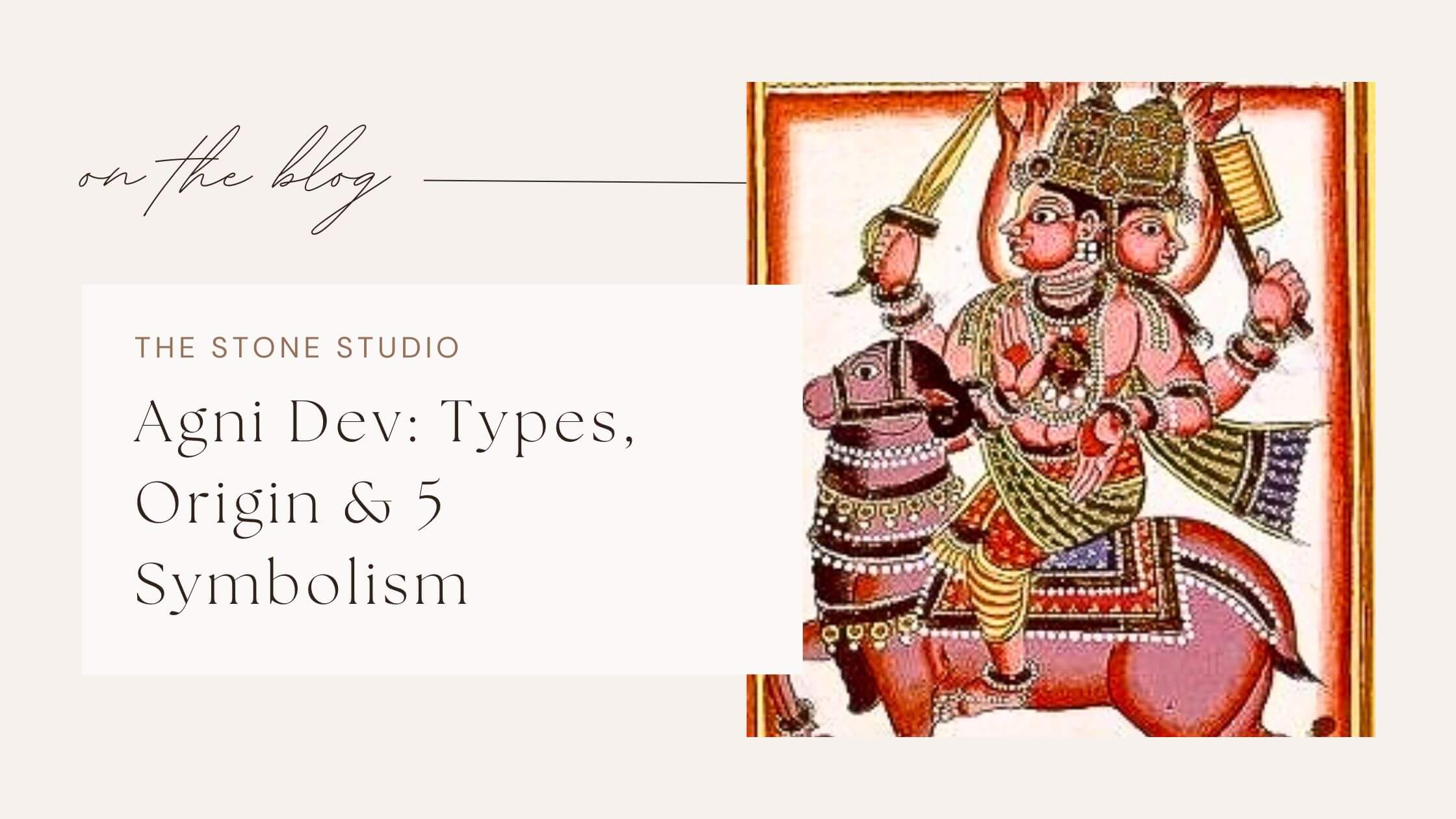
Agni is often shown riding a ram, which symbolizes his strength and gentleness. This image reflects the two sides of Agni’s nature: he can destroy like fire, but he can also inspire and give life. Artists often represent him with two faces, emphasizing his complex character—he can take away what is no longer needed but also spark new ideas.
Agni is also noted for having seven unique tongues, each with a special name: Kali, Karali, Manojava, Sulohita, Sudhūmravarṇa, Sphulinginī, and Viśvarūpī. These tongues represent his strong desire for the offerings placed in front of him during yajñas. He consumes these gifts, turning them into a divine power that goes beyond the physical world. Each tongue symbolizes a different aspect of fire’s strength. Through these rich attributes, Agni plays a vital role in Vedic tradition, balancing creation, destruction, and transformation in the universe.
Symbolism of Agni Dev
Agni is an important fire god in Hinduism and represents many deep meanings:
- Purification: Fire can cleanse and refine materials. Agni symbolizes this purification process, freeing karma and intentions from impurities. Through its flames, Agni changes the ordinary into the sacred, allowing for spiritual growth and renewal.
- Transformation: Agni shows how fire transforms things. Common offerings are turned into something special by the flames. This ability to elevate the ordinary highlights the transformative power of devotion.

Messenger (Dūta): Agni acts as a messenger who carries human offerings and prayers to the gods. The smoke and flames connect the earthly with the divine, ensuring that worshippers’ intentions reach the divine realm.
Energy and Vitality: Agni represents the energy that fuels life. In our bodies, it stands for the digestive fire, called jatharagni, which controls health and metabolism. This inner fire is a source of strength and shows the dynamic energy of life.
- Divine Witness (Sākshi): In Hindu weddings, Agni Dev plays a key role as the divine witness. He watches over vows and commitment. His flames symbolize the importance of promises made, reminding people of the vows exchanged in a sacred setting.
Agni represents a rich blend of spiritual meaning, guiding people in their search for purity, transformation, and a connection with the divine.
Head over to The Stone Studio to explore our stunning range of Lord Agni statues and other Godly Figures, expertly crafted to enhance the beauty of your home and garden!
www.thestonestudio.in
Download Our Free Brochure Here!
Agni in Mythology
The Story of Agni Dev and Sage Bhrigu
In a lively forest, Agni, the God of Fire, sought refuge. He was tired from consuming many offerings, both good and bad, and escaped to the shadows. The other gods missed him, so with the help of Sage Bhrigu, they searched for him in the woods. They found Agni and reminded him of his important role as a purifier. To help him, they gave him a special gift that allowed him to consume all offerings without being affected by them, reinforcing his vital role in keeping balance in the universe.
Agni and Ganga
In Puranic stories, Agni plays an important role in the birth of Kartikeya, the God of War. This happened when Lord Shiva’s fiery seed needed a pure place to grow. Agni carried this powerful essence to the pure waters of the Ganga. The river welcomed the fiery seed and helped it develop. From this union, Kartikeya was born, a warrior meant to protect good and bravery.

Agni Dev and Draupadi
In the Mahabharata, Draupadi’s birth story takes place in the flames of sacrifice. She was born from the sacred fire during King Drupada’s great yajna. Draupadi emerged as a symbol of strength and grace, with the flames celebrating her creation. This event shows Agni’s role in bringing new life into the world and highlights his power to create strong individuals who will influence fate.
Types of Agni and Their Iconography
Gārhapatya Agni: Gārhapatya Agni is the home fire, managed by families. This fire is crucial in Vedic rituals. It stays lit in traditional households and is passed from father to son, symbolizing family, tradition, and continuity. In art, Garhapatya Agni often sits on a ram and holds ritual tools, highlighting his key role in keeping the home fire alive.
Āhavanīya Agni: Āhavanīya Agni is the fire used for sacrifices in Vedic rituals and yajñas. It is typically located at the eastern side of the ritual altar and represents the path to the divine, taking offerings from Earth to the gods. In art, Āhavanīya Agni appears upright and energetic, showing aspiration and connection, often holding spoons or ladles for offerings.
Dakṣiṇāgni: Dakṣiṇāgni, positioned in the south, is linked to rituals for ancestors. It is called upon during ceremonies for the deceased and represents the connection between the living and their ancestors. The images often show a calm expression and include items like a pot or ritual ladle, reflecting its respectful purpose.
Śiva Agni I & II: These forms of Agni connect with Shaivite energy, possibly representing the powerful and transformative fire of Rudra (a form of Shiva). In these images, Agni has strong expressions, multiple arms, and decorations, sometimes appearing with other gods. Śiva Agni reflects destruction and regeneration, mirroring Shiva’s role in creation.

Sama Agni: Sama Agni is a less-known but meaningful form of Agni, related to balance and harmony, qualities found in the Sāma Veda, which is sung in musical tones. This Agni may symbolize the controlled fire of ritual chanting. In art, Sama Agni tends to look symmetrical, representing spiritual order and balance.
Kevala Agni: Kevala Agni represents purity—Agni in its most basic form. It symbolizes the internal realization of fire that exists beyond opposites. Kevala Agni is typically shown in a calm, meditative pose, exuding peace with a simple appearance that emphasizes spiritual tranquility.
Bala Agni: Bala Agni represents the youthful side of Agni, full of energy and the passion of youth. This form is vigorous and often depicted with strong posture and bright features. It highlights the potential and growing strength of inner fire and is invoked in rituals for birth, initiation, and youthful activities.
Pradhāna Agni: Pradhāna Agni is the main fire among all forms. It leads other fires in spiritual and ritual roles. In art, Pradhāna Agni appears grand, with multiple arms and a powerful presence, often surrounded by other forms of Agni. This shows its central role in transformation during Vedic rituals.
Ahavaniya Agni: Similar to Āhavanīya Agni, this form may show regional or functional differences, focusing on Agni’s role in receiving offerings. This depiction might feature strong expressions and dynamic poses, reflecting the passion and urgency of sacrifice.
Yauvana Agni: Yauvana Agni represents Agni in his prime, showcasing strength, energy, and authority. This form suggests peak physical and spiritual power. In images, Yauvana Agni looks muscular and bright, often holding weapons or ritual items. He symbolizes the drive for spiritual growth and ambition in one’s prime.

Agni’s Role in Rituals
Agni is invoked at the beginning of most Vedic hymns, and no Vedic yajna (sacrifice) is considered complete without him. The Gayatri Mantra, one of the most sacred chants, is closely associated with the fire of inner awakening.
Agni also plays a significant role in the following rituals:

Upanayana Samskara: The sacred thread ceremony begins with fire worship.
Vivaha Samskara: Marriages are conducted in front of Agni, symbolizing his presence as a witness to the union.
Antyeshti (Last Rites): The cremation ceremony, which is the final rite, returns the body to Agni, signifying release from the physical world.
Agni is so much more than just the god of fire in Hinduism; he represents the eternal light that connects us to the divine, the inner spark of transformation, and a protector of sacred truths. Through his many forms—like Gārhapatya for our homes, Āhavanīya for rituals, or even the symbolic representations such as Bala Agni and Śiva Agni—he shows us the beauty of inner fire, clarity, purity, and unwavering devotion.
Let’s embrace Agni, the divine flame, as he lights up our lives, helps us shed ignorance, and ignites the eternal knowledge within us!
FAQS
Who is Agni Dev in Hindu mythology?
Agni Dev is the god of fire in Hinduism. He is an important deity and acts as a messenger between humans and gods. Agni Dev is present in every sacred ritual (Yajna) and represents purity, transformation, and energy.
What is the significance of having an Agni Dev statue?
An Agni Dev statue represents the divine presence during fire rituals and helps purify the area. People place it in homes, temples, or Yajna spaces to invite spiritual power, protection, and a connection to the divine.
Where should I place the Agni Dev statue in my home or temple?
Traditionally, you should place the statue in the eastern or southeastern direction of a prayer room or Yajna space, as these directions are linked to fire energy.

Explore The Stone Studio’s unique collections to get customized Agni Dev Statues for your personal Altars & Garden decor!


